
Restaurant Cleaning Fort Worth
Detailed kitchen, dining area, and equipment cleaning built around your operating schedule, food-safety priorities, and facility needs.
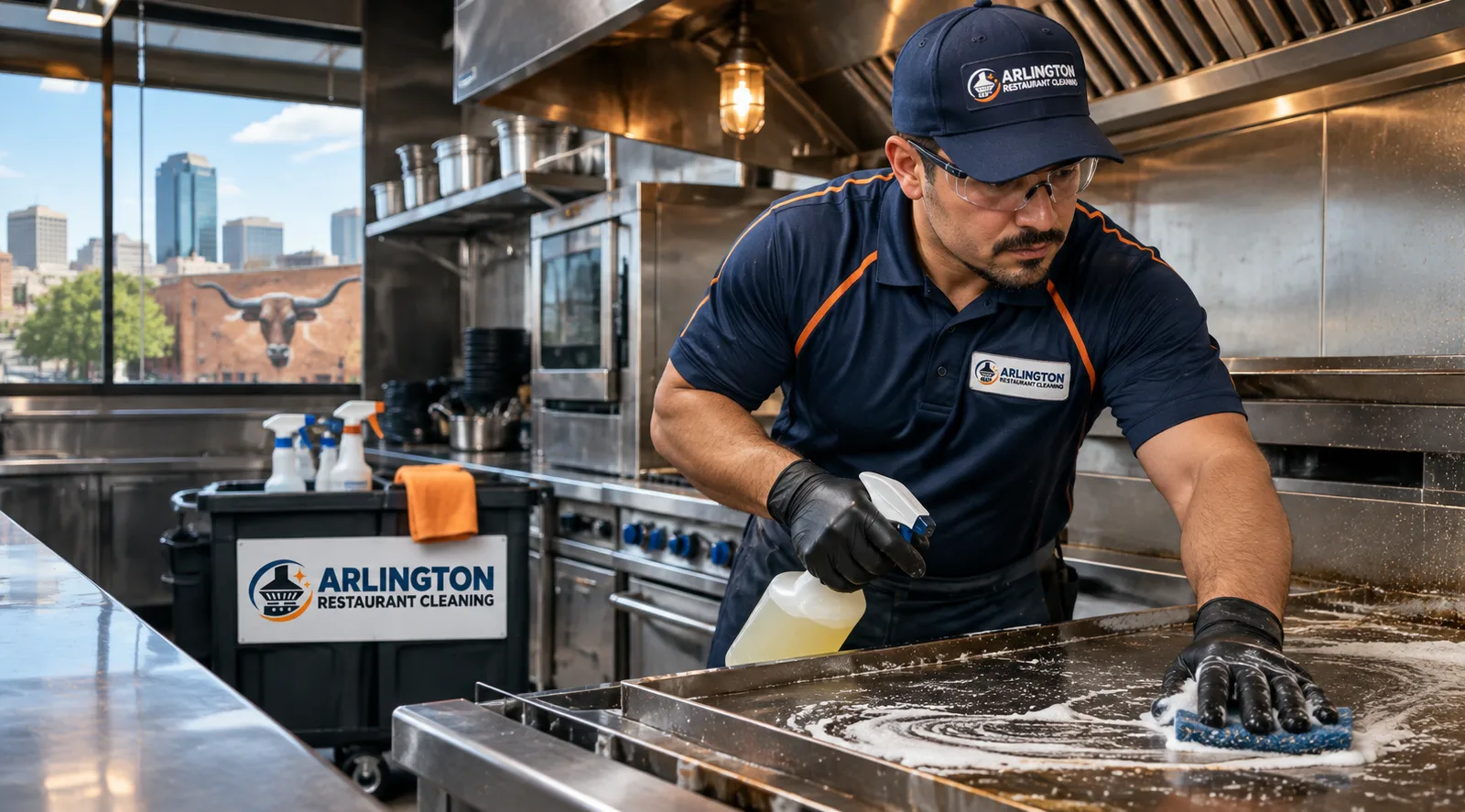
Commercial Restaurant Cleaning for Fort Worth Operations
Restaurant Cleaning Fort Worth requires more than wiping visible surfaces at closing time. Grease settles behind equipment, food residue collects under prep stations, and high-touch areas are used throughout every shift. Arlington Restaurant Cleaning develops a written scope around your kitchen layout, operating hours, cleaning frequency, and priority areas. The goal is consistent work that supports the facility's sanitation procedures without disrupting service.
Our team can clean production kitchens, prep areas, warewashing zones, walk-in exteriors, dry-storage floors, dining rooms, restrooms, and employee areas. We are restaurant specialists serving Arlington, TX positioned to support businesses in Fort Worth while keeping communication and scheduling practical for operators across the western Metroplex.
Local operating conditions affect the work. Fort Worth's hot summers can increase demands on busy kitchens, while airborne dust and pollen enter through doors, loading areas, and ventilation paths. Restaurants near the Fort Worth Stockyards may contend with heavy visitor traffic, and downtown dining rooms often require service around late operating hours and limited loading access. Near the Cultural District, event schedules can create sharp changes in guest volume. A useful cleaning plan accounts for those conditions instead of applying the same checklist to every property.
What a Restaurant Cleaning Scope Can Cover
Back-of-House Cleaning
Degreasing and cleaning can cover floors, walls, baseboards, prep tables, sinks, shelving exteriors, dish areas, and accessible surfaces beneath movable equipment. Soil type determines whether the work calls for an alkaline degreaser, neutral cleaner, or another compatible product.
Dining and Guest Areas
Tables, chairs, booths, floors, entry glass, host stations, and high-touch points can be included. The schedule can prioritize work after closing or before opening so cleaned areas are ready for the next service period.
Restrooms and Employee Areas
Fixtures, partitions, dispensers, mirrors, floors, and touchpoints receive a defined cleaning routine. Product dwell time and label directions matter when disinfectants are part of the scope.
Periodic Deep Cleaning
Detail work addresses buildup missed during routine shifts, including corners, grout lines, casters, equipment sides, floor edges, and accessible spaces behind appliances. Periodic work can be scheduled separately from recurring cleaning.
Floor Care
Kitchen floors may require degreasing and agitation, while dining areas can include tile, sealed concrete, or other finish-specific care. Correct dilution and thorough soil removal help prevent sticky residue.
Opening or Turnover Cleaning
Restaurants preparing for an opening, management change, inspection, or return to service can receive a detailed reset based on current conditions. The scope identifies exclusions and access requirements before work begins.
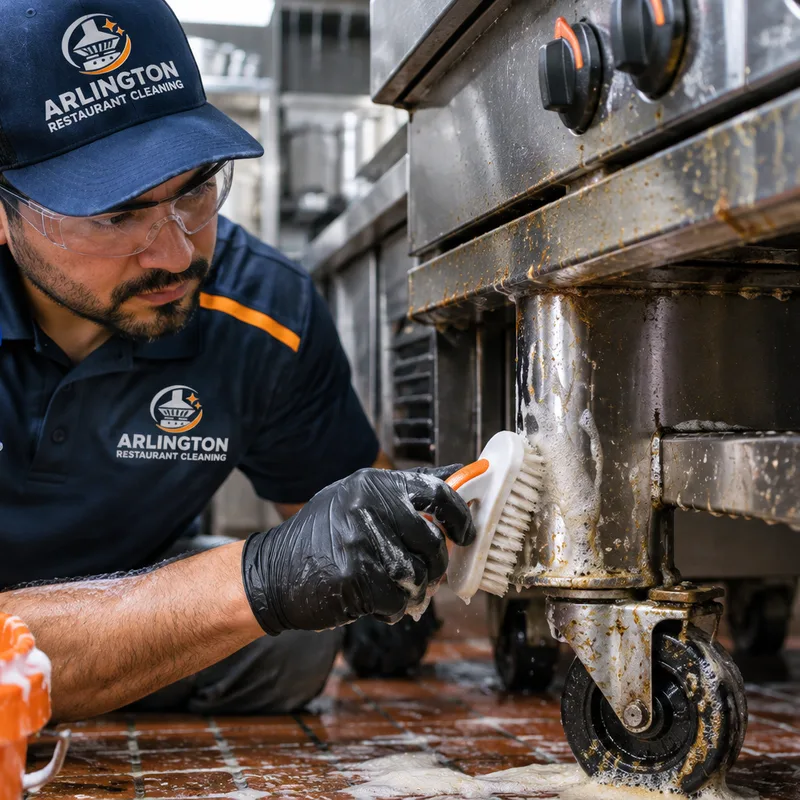
Equipment cleaning starts with identifying what can be safely accessed and which components require an authorized technician. Our work can address stainless steel exteriors, control-area surrounds, legs, casters, splash zones, removable racks, and accessible surfaces around ranges, fryers, ovens, grills, prep units, and refrigeration equipment. Manufacturer instructions take priority because finishes, electrical components, seals, and coatings do not all tolerate the same chemicals or moisture.
Heavy grease usually needs staged removal. Loose debris is removed first, a compatible degreaser is applied at the proper dilution, and the product receives its required contact time before agitation and recovery. Food-contact surfaces must be washed, rinsed, and sanitized with an approved product according to its label. Cleaners and sanitizers are different products with different jobs, and they should not be mixed unless a product label specifically permits it.
Gas lines, electrical connections, refrigeration systems, internal mechanical assemblies, and fire-suppression components are outside ordinary cleaning work. Equipment should be shut down, cooled, and made accessible when required. Fixed cooking exhaust systems also need specialized service; routine surface cleaning does not replace professional hood and duct cleaning performed to the applicable fire-safety standard.
How Restaurant Cleaning in Fort Worth Is Planned
-
Step 1 of 5
Walk Through the Facility
The process begins with the kitchen, dining room, storage areas, restrooms, access points, and equipment arrangement. We note surface materials, grease levels, floor drains, movable items, sensitive components, and any areas controlled by another vendor.
-
Step 2 of 5
Define the Written Scope
The scope lists included areas, cleaning frequency, expected access, products or methods, and exclusions. It also identifies whether restaurant staff will cool equipment, remove food, clear counters, or move small items before the crew arrives.
-
Step 3 of 5
Set a Work Window
Service may be arranged after closing, before opening, or during a planned shutdown. Downtown access, delivery traffic, alarm procedures, key control, and the time needed for floors to dry are considered when setting the work window.
-
Step 4 of 5
Clean in a Controlled Order
Crews generally work from higher surfaces toward lower surfaces and from cleaner zones toward heavier soil. Tools can be assigned by area to limit cross-contamination between restrooms, dining spaces, and food-production areas.
-
Step 5 of 5
Review the Completed Work
A final check covers the agreed scope, visible residue, equipment placement, touchpoints, and floor condition. Any access limitation or maintenance concern observed during cleaning can be documented for the operator.
How Much Does Restaurant Cleaning Cost in Fort Worth?
Restaurant cleaning in Fort Worth typically costs about $300 to $1,000 per visit, while large kitchens, heavy grease removal, or detailed equipment projects may run $1,000 to $3,000 or more. Recurring light service generally costs less per visit than an initial deep clean.
Final pricing depends on square footage, soil level, equipment quantity, service frequency, access, operating window, floor material, and whether equipment must be moved. Specialty exhaust, pest, mechanical, and fire-suppression work is priced separately by qualified providers. The exact cost is confirmed after a facility walk-through and written scope.
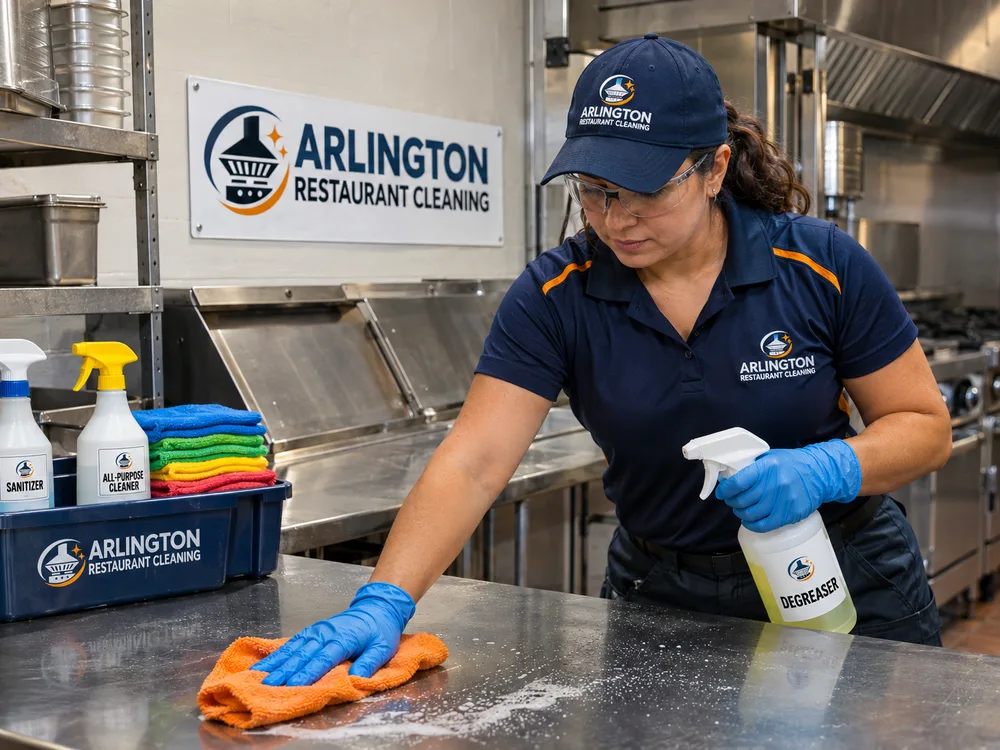
Cleaning That Fits Food-Safety Procedures
A professional cleaning crew supports a restaurant's sanitation program, but the operator remains responsible for food handling, employee practices, temperature control, pest prevention, and regulatory compliance. Fort Worth food establishments operate under local and Texas food-safety requirements, so cleaning procedures should fit the restaurant's own policies and equipment instructions.
Cross-contamination controls are practical and visible. Restroom tools should not enter food-production areas. Cloths and brushes can be separated by task or color. Chemical containers need clear labels, and Safety Data Sheets should be available for workplace products. Staff should follow label directions for dilution, personal protective equipment, ventilation, rinsing, and contact time.
A sanitation log can record the area, date, task, and responsible person. That record does not guarantee an inspection outcome, but it helps managers verify recurring work and spot missed tasks. Cleaning also does not correct cracked flooring, damaged grout, leaking equipment, failing seals, or pest entry points. Those conditions should be referred for repair rather than covered with repeated chemical treatment.
A facility walk-through turns a broad cleaning request into a clear scope, realistic schedule, and price tied to the actual kitchen.
Restaurant Cleaning Fort Worth FAQs
Can restaurant cleaning be completed after closing? +
Yes, restaurant cleaning can usually be scheduled after closing or before opening when access and drying time permit. Fort Worth restaurants with late service, especially in downtown and visitor-oriented districts, may need a staggered start so staff can finish closing duties before cleaning begins. Alarm access, keys, equipment cooldown, and the next delivery window should be agreed upon in advance.
How often should a commercial kitchen receive deep cleaning? +
The right frequency depends on cooking volume, menu, equipment, and how quickly grease accumulates. A high-output fryer line may need detailed attention more often than a light-prep kitchen. Daily staff sanitation should continue between professional visits, while periodic work can target floors, casters, walls, equipment sides, and accessible spaces that are difficult to reach during service.
Does restaurant equipment cleaning include moving every appliance? +
No, equipment is moved only when it can be handled safely and without disturbing utility connections. Mobile units on sound casters may be repositioned with approval, but gas-connected, hardwired, plumbed, or refrigeration equipment may require a qualified technician. The walk-through identifies accessible areas so the quote does not assume unsafe movement.
Can a cleaning company sanitize food-contact surfaces? +
Yes, food-contact surfaces can be sanitized when the process uses an appropriate product at the label concentration and contact time. Soil must first be removed through washing and rinsing because sanitizer is not a substitute for cleaning. Restaurant staff should remove or protect exposed food, utensils, and single-service items before work starts.
Is hood and exhaust duct cleaning part of standard restaurant cleaning? +
No, standard restaurant cleaning does not include internal hood, fan, or exhaust duct service unless that specialized work is explicitly contracted to a qualified provider. Surface cleaning around the cooking line is separate from fire-safety exhaust-system cleaning. Operators should keep the specialty provider's documentation with their maintenance records.
What affects the price of Restaurant Equipment Cleaning Fort Worth? +
The main cost factors are equipment count, grease thickness, accessibility, required disassembly, shutdown time, and the surfaces involved. A lightly soiled stainless exterior needs less labor than a fryer bank with buildup around casters and adjacent walls. The final scope should also state which components remain the responsibility of restaurant staff or service technicians.
What should staff do before the cleaning crew arrives? +
Staff should secure food, remove personal items, clear agreed work surfaces, and cool designated equipment before the scheduled start. The restaurant should also identify sensitive controls, damaged surfaces, restricted storage, chemical policies, and items that cannot be moved. Clear preparation is especially useful when the work window ends shortly before morning deliveries or opening duties.
Build a Cleaning Plan Around Your Restaurant
Tell Arlington Restaurant Cleaning about your facility, equipment, operating hours, and priority areas. We will help define a practical scope for recurring service, deep cleaning, or detailed equipment care.