
Restaurant Cleaning Services in Arlington
Keep dining rooms, bars, restrooms, floors, and back areas ready for every shift with a cleaning plan built around your hours and standards.
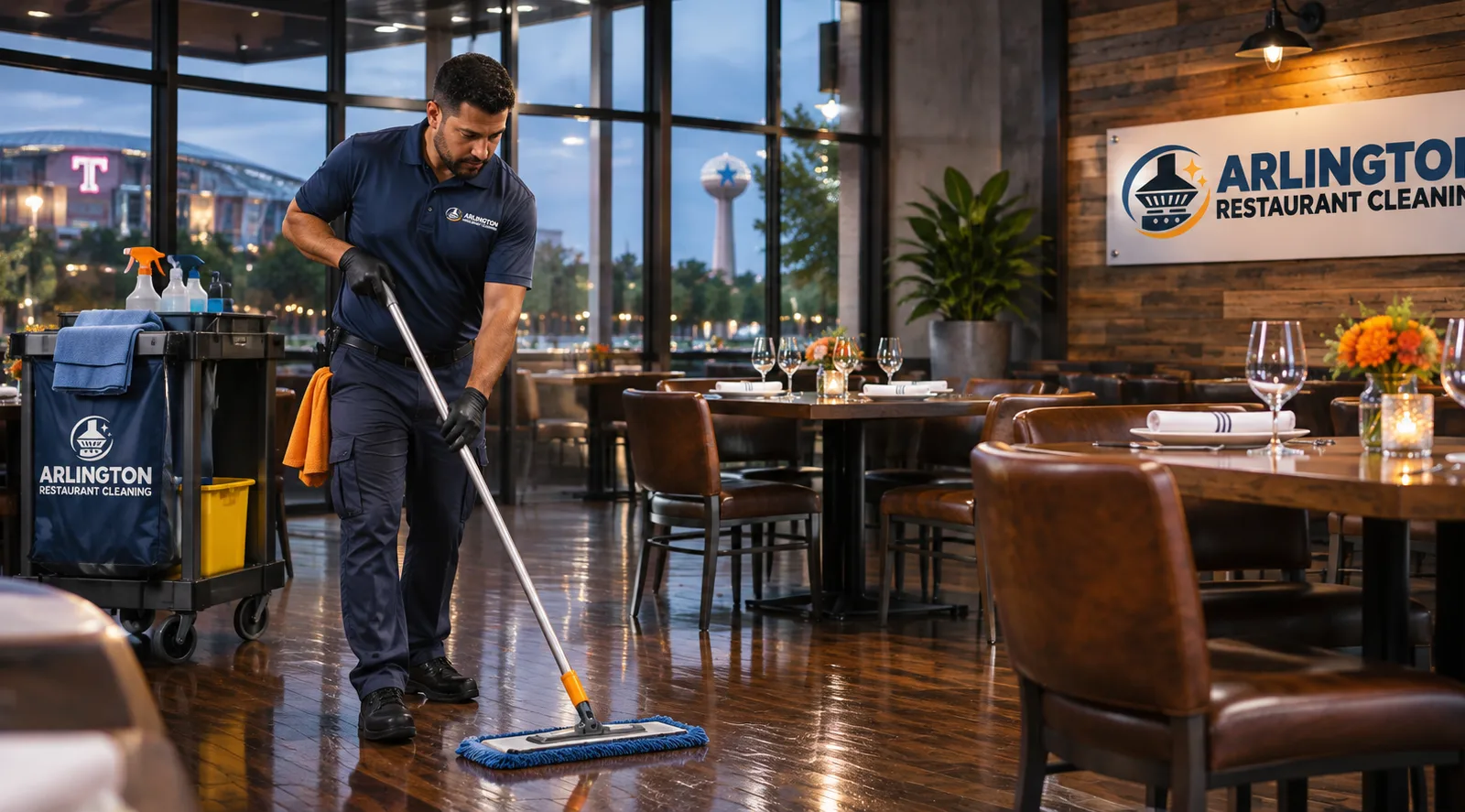
Reliable Restaurant Cleaning Services Around Your Schedule
Restaurant Cleaning Services should support daily operations without getting in the way of guests, servers, or kitchen staff. Arlington Restaurant Cleaning develops a written scope around your opening hours, closing routine, floor materials, traffic patterns, and highest-priority areas. Recurring service may be scheduled after closing, before opening, or during another agreed access window.
Our work can cover the guest-facing dining room, entry, host stand, bar, restrooms, service stations, corridors, employee areas, and selected back-of-house spaces. We define which surfaces are cleaned, how often each task is completed, and what your staff should handle between visits. With attention to practical details, an experienced restaurant team in Arlington, TX cleans table bases, chair legs, corners, floor edges, door glass, partition tops, and the buildup that ordinary closing routines can miss.
Arlington restaurants contend with dust and grit carried in during dry weather, plus mud and moisture around entrances during storms. Entertainment District businesses may also see sharp traffic changes around events at AT&T Stadium, Globe Life Field, and Choctaw Stadium. A useful plan accounts for those conditions rather than assigning every area the same frequency.
Cleaning for Every Part of the Restaurant
Front Of House Cleaning
Restaurant Front Of House Cleaning in Arlington can include entrances, host stations, tables, seating, ledges, glass, service stations, and visible touchpoints. The goal is a clean first impression without leaving residue on guest-contact surfaces.
Restaurant Dining Room Cleaning
Dining Area Cleaning addresses crumbs, spills, fingerprints, dust, and soil around tables and chairs. Special attention goes to edges, corners, booths, table bases, and other places that are easy to miss during a rushed close.
Restaurant Bar Cleaning
Bar cleaning can cover counters, stools, foot rails, exterior cabinet faces, floors, mirrors, and accessible fixtures. Product selection should match each surface, especially wood, stainless steel, stone, and sealed flooring.
Restroom Cleaning
Restaurant Restroom Cleaning in Arlington includes fixtures, mirrors, partitions, dispensers, touchpoints, floors, and odor-control tasks within the agreed scope. Supplies and refill responsibilities are clarified before service begins.
Restaurant Floor Cleaning
Floor care may include vacuuming, sweeping, damp mopping, machine scrubbing, and periodic detail work. Methods are selected for the material, finish, soil level, slip concerns, and manufacturer guidance.
Back Of House Cleaning
Restaurant Back Of House Cleaning in Arlington can address corridors, employee spaces, dry-storage floors, prep-area floors, washable walls, and exterior equipment surfaces. Food-contact surfaces and specialized equipment are included only when specifically listed in the scope.
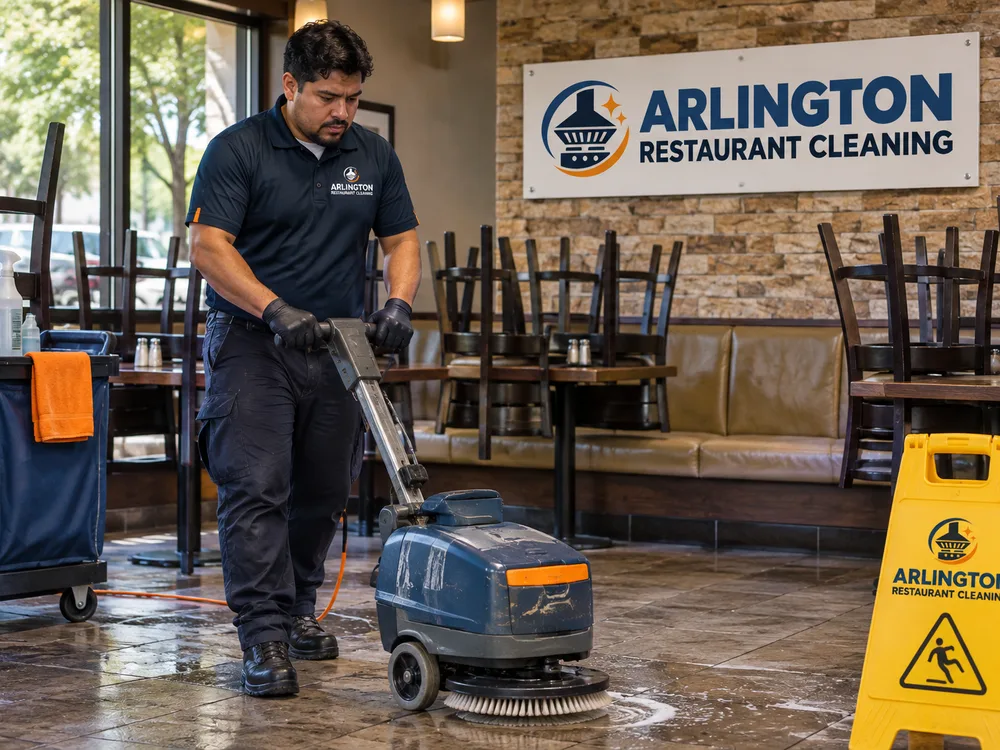
Dining-room floors collect tracked-in grit, food particles, beverage residue, and grease transferred from service routes. Using one chemical or one method everywhere can leave film, harm a finish, or create a slippery surface. The cleaning plan should identify whether an area has luxury vinyl tile, ceramic or porcelain tile, sealed concrete, quarry tile, wood, carpet, or another material.
Routine Restaurant Floor Cleaning starts with dry soil removal. Carpeted areas are vacuumed with attention to edges and under accessible furniture. Hard floors may be swept or dust-mopped before damp mopping or machine scrubbing. Tile-and-grout areas often need periodic agitation because soil settles below the tile face. Grease-prone routes between the kitchen and dining room may require a suitable degreaser, controlled dwell time, and thorough recovery or rinsing.
Entrances near Interstate 30 and major entertainment venues can experience concentrated foot traffic before and after events. A restaurant in that setting may need extra mat care and entry-floor attention on event nights, while a lower-volume dining room may rely on a different schedule. The right frequency comes from actual traffic and soil, not a generic checklist.
High Dusting and Detail Work Guests Notice
High Dusting removes buildup from accessible elevated surfaces such as vents, light housings, beams, partition tops, ledges, pipes, and decorative elements. These areas are commonly cleaned less often than tables and floors, yet settled dust can become visible under dining-room lighting or fall onto lower surfaces. The scope should state which elevated items are included and whether ladders or specialized extension tools are needed.
Good sequencing matters. High surfaces are handled before lower surfaces and floors so dislodged dust is removed during the same visit. Workers should protect tables, bar surfaces, and exposed service items before beginning. Delicate fixtures, open food, energized equipment, and surfaces beyond safe access require separate planning rather than improvised cleaning.
Detail cleaning also covers the low and hidden areas that shape a room's overall appearance: chair rungs, booth gaps, table pedestals, baseboards, floor edges, door tracks, and the space around movable service stations. These jobs can rotate through a recurring schedule instead of extending every nightly visit.
How We Build Your Restaurant Cleaning Plan
-
Step 1 of 5
Walk the Restaurant
We review the dining room, bar, restrooms, traffic routes, floor types, employee areas, and any back-of-house spaces under consideration. Access restrictions and sensitive surfaces are identified at this stage.
-
Step 2 of 5
Define the Written Scope
The scope lists tasks by area and frequency. It also separates routine work from periodic jobs such as high dusting, grout detailing, carpet care, or deeper floor service.
-
Step 3 of 5
Set Access and Timing
We agree on a service window, entry procedure, alarm instructions, lighting needs, and a secure closing process. Event-driven operations in Arlington can be considered when service frequency or timing needs to change.
-
Step 4 of 5
Clean in a Controlled Sequence
Crews generally work from high surfaces to low surfaces and complete floors after surrounding detail work. Cleaning products and tools are selected for the surfaces named in the scope.
-
Step 5 of 5
Review and Adjust
Feedback is tied to specific rooms or tasks so the plan can be corrected efficiently. Seasonal soil, menu changes, special events, and shifting guest volume may justify updates.
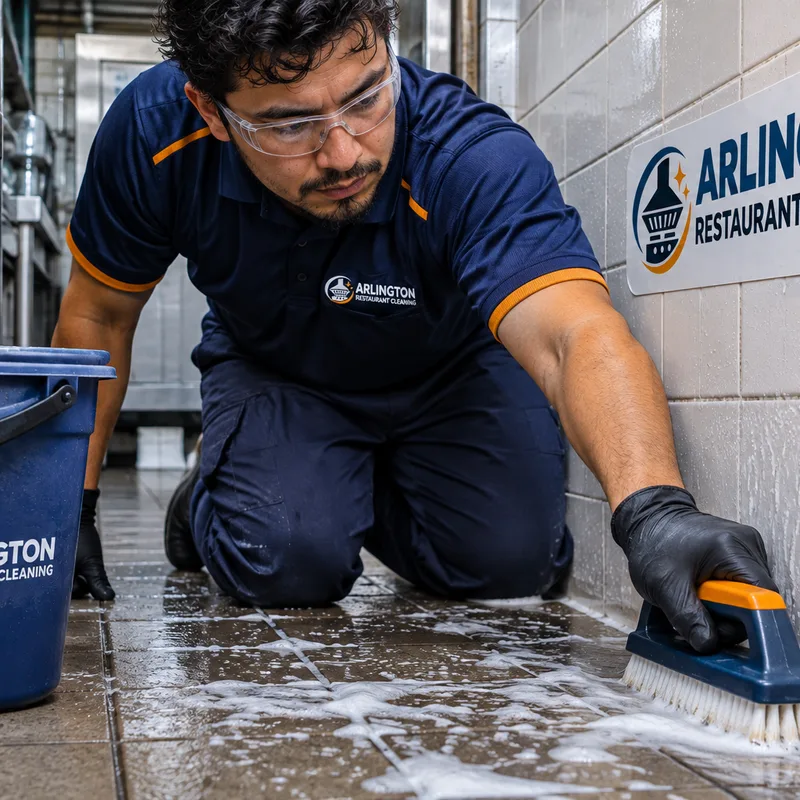
Clear Boundaries for Back-of-House Work
Back-of-house cleaning requires a precise scope because a restaurant kitchen contains hot equipment, sharp tools, food-contact surfaces, chemicals, floor drains, and areas controlled by operating procedures. Restaurant Back Of House Cleaning in Arlington may include accessible floors, washable walls, employee rooms, corridors, dry-storage areas, and the exterior surfaces of equipment. The exact inclusions should be agreed upon before work starts.
Routine janitorial cleaning is different from exhaust-system cleaning, pest control, hood fire-suppression work, grease-trap pumping, and equipment repair. Those jobs require their own providers, procedures, or qualifications. A sound proposal does not blur those boundaries.
Cleaning products also need proper handling. Safety Data Sheets should be available, containers should be labeled, and chemicals should never be mixed unless their manufacturer specifically permits it. Food and single-service items must be protected. When food-contact surfaces are included, the cleaning and sanitizing steps should follow the restaurant's approved procedures and product labels.
What to Look for in a Restaurant Cleaning Proposal
Tasks Listed by Area
A useful proposal distinguishes the dining room, bar, restrooms, entry, service stations, floors, and back areas. Broad phrases such as general cleaning leave too much open to interpretation.
Frequencies in Writing
Nightly, weekly, and periodic tasks should be separated. High dusting, grout work, carpet care, and floor detailing often follow a different schedule than wiping tables or cleaning restrooms.
Surface-Specific Methods
The provider should ask about flooring, finishes, stone, wood, stainless steel, glass, and other sensitive materials before selecting products or equipment.
Access Responsibilities
The plan should address keys, alarms, locked rooms, movable furniture, waste locations, and the condition in which the restaurant must be left after service.
Defined Quality Checks
Identify who receives feedback, how missed work is reported, and how changes are documented. Specific checks are more useful than vague promises.
Scope Exclusions
Specialty work, inaccessible areas, active cooking equipment, and services supplied by other vendors should be clearly excluded unless separately approved.
Bring your operating hours, floor types, priority areas, and current cleaning concerns to the first conversation. We can turn them into a clear scope for routine and periodic work.
Restaurant Cleaning Questions
How much do Restaurant Cleaning Services cost in Arlington? +
Pricing depends on cleanable square footage, service frequency, floor materials, soil level, number of restrooms, back-of-house scope, and access time. A dining room that needs routine nightly care is priced differently from a restaurant requesting periodic high dusting, machine floor work, or detailed grout cleaning. Event-driven traffic near Arlington's stadium district can also change labor needs on selected nights. A walkthrough is the best way to produce an accurate written quote.
Can cleaning be scheduled after the restaurant closes? +
Yes, service can be planned for an agreed window after closing, before opening, or at another time that fits operations. The plan should document entry, alarms, lighting, locked areas, waste handling, and the final securing of the property. Arlington restaurants with late event-night traffic may need flexible access times rather than one fixed start time every day.
What is included in Restaurant Front Of House Cleaning in Arlington? +
Front-of-house cleaning can include entrances, host stands, door glass, tables, chairs, booths, ledges, service stations, visible touchpoints, and dining-room floors. Bar areas and restrooms may be included in the same agreement but should have their own task lists. Items such as upholstery extraction, high dusting, and machine floor care are often scheduled separately.
Do you provide Restaurant Restroom Cleaning in Arlington? +
Yes, restroom work can cover toilets, urinals, sinks, counters, mirrors, partitions, dispensers, touchpoints, floors, and agreed odor-control tasks. The proposal should state whether consumable restocking is included and who supplies paper products, soap, liners, or other materials. Cleaning frequency should reflect guest volume and any inspections performed by restaurant staff during operating hours.
Can you clean the dining room and back of house during the same visit? +
Yes, both areas can be serviced during one visit when the scope, safety controls, and operating conditions allow it. Separate tools or color-coded materials can help control cross-contamination between restrooms, dining spaces, and food-service areas. Active cooking, hot equipment, exposed food, or blocked access may require certain tasks to wait until the area is safely released.
How often should high dusting and deep floor work be scheduled? +
The right frequency is based on visible buildup, ceiling and fixture design, floor material, traffic, and the restaurant's appearance standards. High ledges near air movement may collect dust faster, while grout, entry flooring, and routes near the kitchen may show soil sooner than low-traffic areas. A walkthrough and early service reviews can establish a practical rotation instead of applying one interval to every surface.
Build a Cleaning Plan Around Your Restaurant
Tell Arlington Restaurant Cleaning about your dining room, bar, restrooms, floors, back areas, operating schedule, and problem spots. We will help define the tasks, frequencies, and access plan before service begins.