
Restaurant Floor Cleaning Dallas
Deep cleaning for dining rooms, cook lines, prep areas, walk-ins, and other hard-working floors, scheduled around your food-service operation.
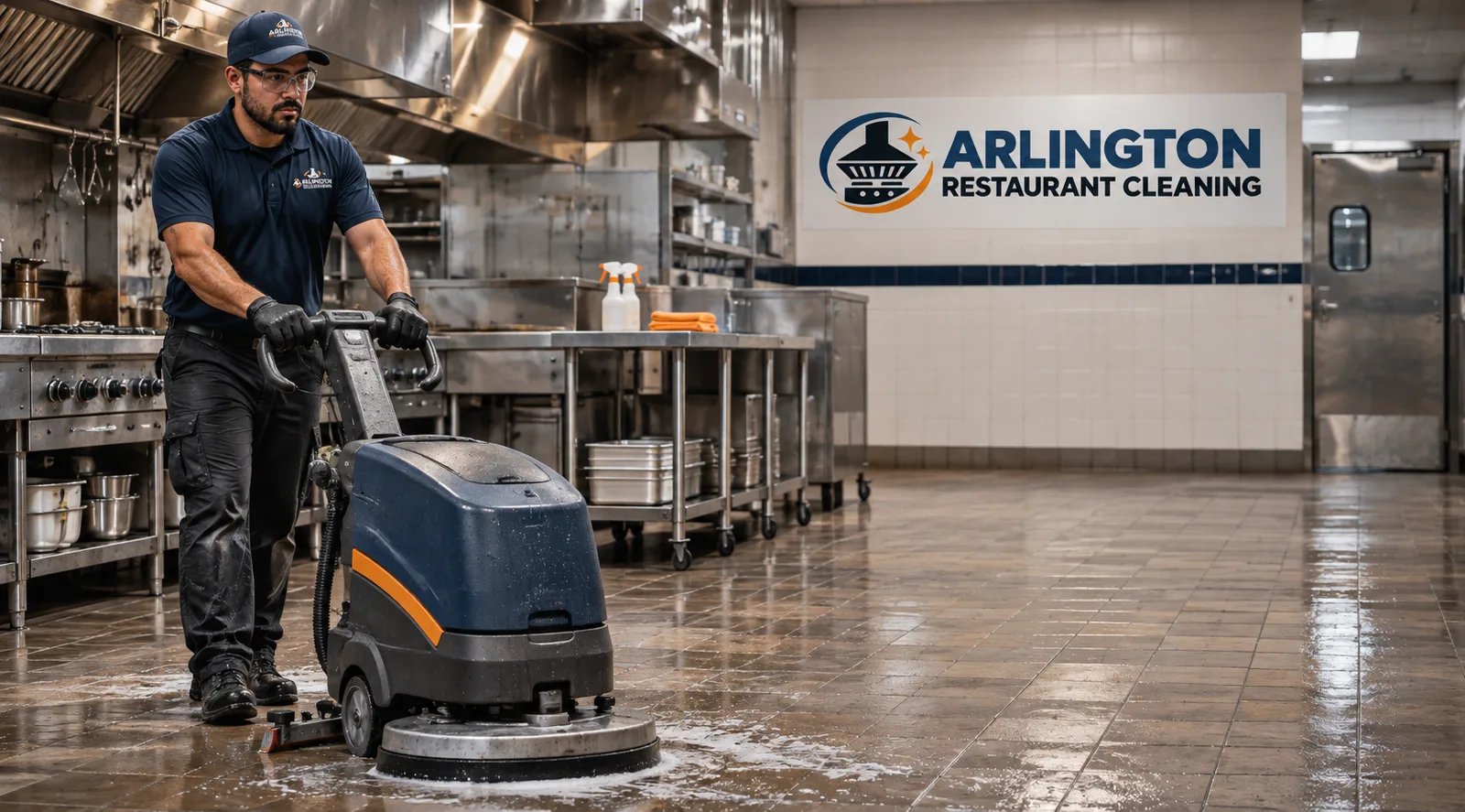
Floor Care Built Around Restaurant Operations
Restaurant Floor Cleaning Dallas requires more than a quick mop after closing. Cooking oil can travel beyond the cook line, food residue settles into grout, and repeated foot traffic presses soil into textured tile. Arlington Restaurant Cleaning addresses that buildup with a written scope based on the floor material, soil level, equipment layout, drainage, and hours available for the work.
Our crews clean front-of-house and back-of-house areas without treating them as identical spaces. Dining-room floors may need controlled chemistry and careful attention near baseboards or furnishings. Kitchens usually require degreasing, agitation, extraction, and detailed work along edges, under movable equipment, and around floor drains. For each service, a professional restaurant company in Arlington plans the work so cleaned areas can dry before employees return and restaurant staff know which spaces must remain clear.
Our base in Arlington gives us practical access to restaurants across the Dallas area. A scheduled scope may cover an independent dining room, a high-volume commercial kitchen, a bar area, or selected service corridors. Every proposal should identify included rooms, floor types, access requirements, and the intended cleaning method before work begins.
What Restaurant Floor Cleaning in Dallas Can Address
A proper floor-cleaning plan starts by identifying the flooring. Quarry tile is common in commercial kitchens because it tolerates demanding use, but its textured surface and grout joints can hold grease. Ceramic or porcelain tile, sealed concrete, luxury vinyl tile, and resilient sheet flooring require different pads, brushes, dwell times, and chemical choices. Wood and specialty finishes need still more restraint.
Service can include dry soil removal, application of an appropriate degreaser or neutral cleaner, mechanical agitation, edge detailing, grout-line scrubbing, and recovery of the dirty solution. The floor is rinsed when the product or soil load calls for it. We also inspect corners, thresholds, toe kicks, and accessible areas around equipment because residue often remains where large machines cannot reach.
A clean appearance alone does not prove that a greasy floor has been corrected. The cleaning solution needs enough dwell time to loosen soil, but it cannot be allowed to dry on the surface. Agitation must reach the texture of the tile, and the suspended residue must be removed rather than spread into another area.
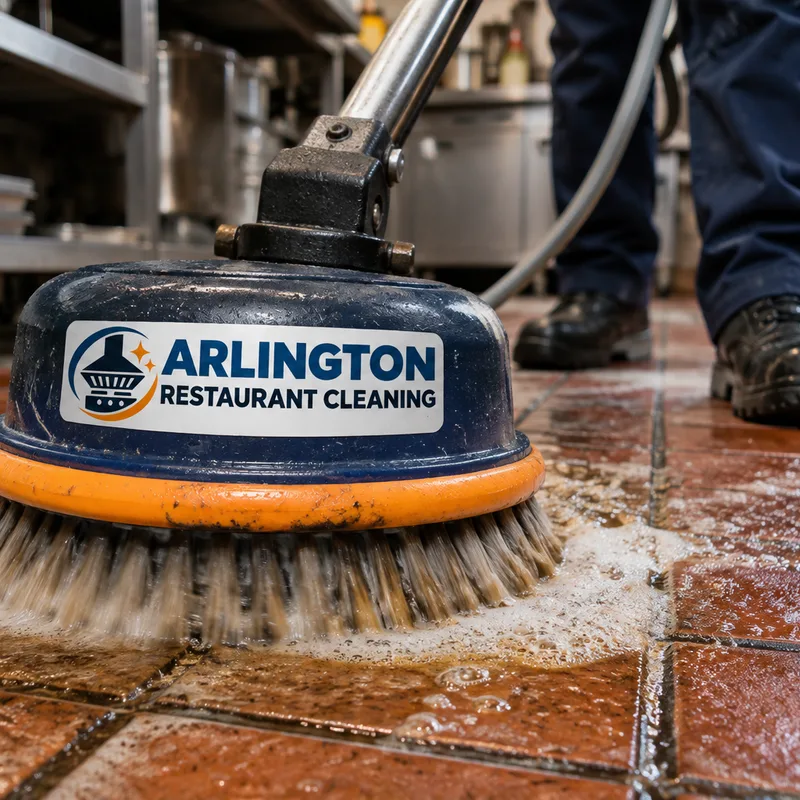
Cook Lines and Fry Stations
These areas often carry the heaviest oil film. Cleaning may require commercial degreaser, mechanical scrubbing, edge work, and recovery near equipment legs and floor drains.
Prep and Dish Areas
Food residue, tracked moisture, and mineral deposits around wet zones call for careful chemical selection and attention to corners, grout, and accessible drain surrounds.
Dining Rooms and Bars
Front-of-house care targets tracked soil, spills, sticky residue, and dull traffic lanes while respecting the finish requirements of the flooring.
Walk-Ins and Storage Areas
Cleaning is planned around stored products, shelving, low temperatures, and limited access. Clear floors and safe access must be arranged before work starts.
Entry and Service Corridors
Entrances and routes between the kitchen, dining room, and waste area collect grit and grease. These transition points need detailed cleaning to reduce residue transfer.
Grout and Edges
Brush work along grout joints, walls, thresholds, and equipment edges addresses buildup that routine flat mopping frequently leaves behind.
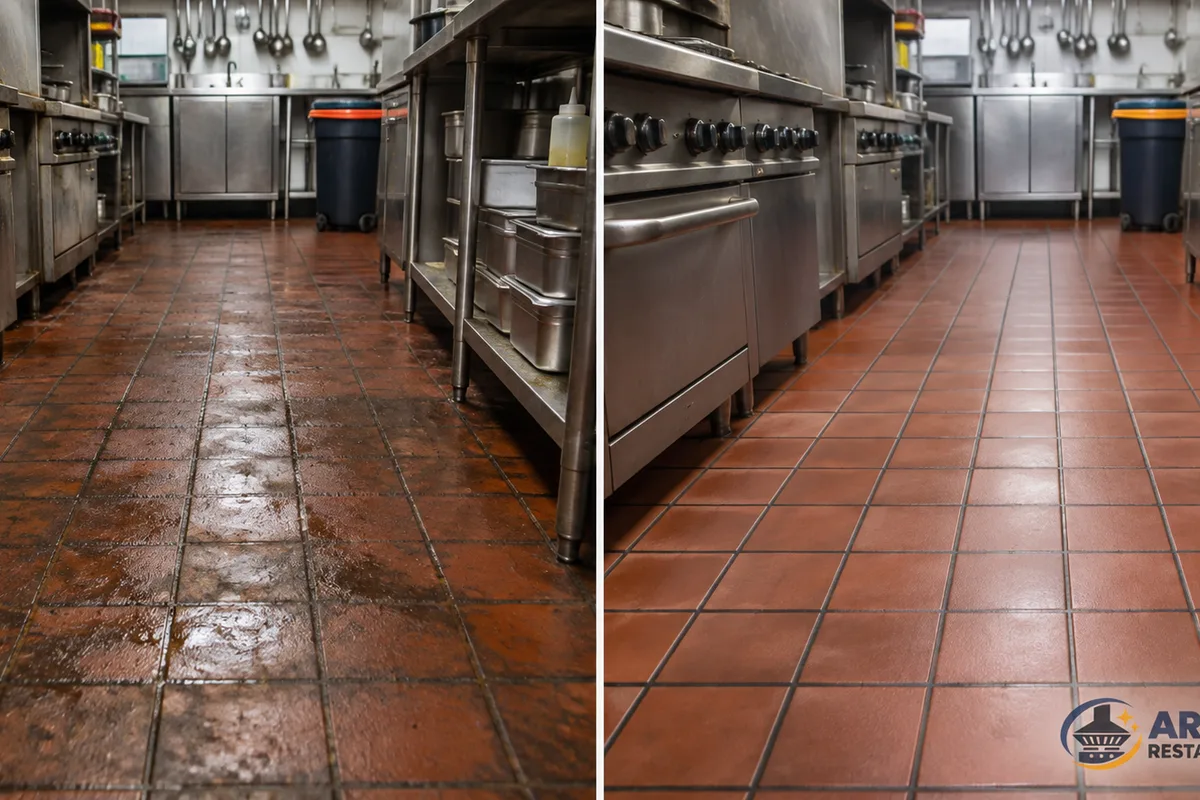
Restaurant Kitchen Deep Cleaning Dallas
Restaurant Kitchen Deep Cleaning Dallas extends beyond open floor lanes when the agreed scope includes hard-to-reach floor areas. Before cleaning begins, movable mats, carts, small racks, and other portable items are removed or repositioned. The crew then dry-cleans loose debris so water does not turn crumbs and soil into slurry.
Degreaser strength is matched to the residue and flooring rather than applied at the strongest concentration by default. After proper dwell time, brushes or floor machines break up bonded soil. Wet recovery removes the released grease. Detail tools are used at baseboards, corners, thresholds, and around fixed equipment that cannot be moved safely. The floor is rinsed as needed and left to dry before normal traffic resumes.
Cleaning around fryers, ovens, refrigeration, or cooking equipment does not mean disconnecting or relocating heavy units without prior arrangements. Gas lines, electrical connections, suppression components, and manufacturer clearances affect what can be moved. The written scope should state whether restaurant staff must reposition equipment or whether cleaning is limited to accessible surfaces.
How the Cleaning Process Works
-
Step 1 of 5
Inspect the Floors and Access
We identify floor materials, heavy-soil zones, drains, fixed equipment, damaged grout, sensitive finishes, water access, and the time available after closing or before opening.
-
Step 2 of 5
Set the Written Scope
The scope lists included rooms, expected preparation, cleaning methods, equipment limitations, and scheduling details. Existing floor damage or finish failure is documented when visible.
-
Step 3 of 5
Prepare the Work Area
Loose debris is removed, approved movable items are cleared, and wet-work areas are controlled. Food, utensils, packaging, and exposed ingredients must be protected or removed by restaurant staff.
-
Step 4 of 5
Degrease, Agitate, and Recover
The crew applies suitable chemistry, allows controlled dwell time, scrubs the surface and edges, then extracts or recovers the contaminated solution.
-
Step 5 of 5
Rinse, Detail, and Dry
Remaining residue is addressed, the floor is rinsed when required, and detailed areas receive a final pass. The restaurant receives practical guidance on drying and reopening the cleaned zones.
Scheduling Around Dallas-Area Food Service
Restaurant floor work is commonly planned after closing, between service periods, or during a scheduled shutdown because crews need clear access and enough drying time. Busy dining districts such as Deep Ellum can involve late operating hours and limited loading access, while Downtown Dallas locations may require advance coordination for parking, elevators, or building entry. Restaurants near the Arlington Entertainment District may need cleaning timed around major event traffic rather than during peak operating windows.
North Texas weather also affects entrances. Thunderstorms can bring water and tracked soil into dining rooms, while long dry periods allow fine grit to collect at doors and move through traffic lanes. Entry mats and routine soil removal help control that material between deeper cleanings. They do not replace periodic mechanical cleaning when grease or embedded residue has accumulated.
Frequency depends on menu, volume, floor texture, ventilation performance, in-house mopping, and the amount of oil handled. A fryer-heavy kitchen may need more frequent degreasing than a low-volume dining room. We can discuss a one-time deep clean or a recurring schedule after inspecting the actual conditions.
Request a CallbackWhat a Reliable Cleaning Scope Should Include
A useful proposal identifies the exact rooms and floor materials, not simply the building's total area. It should state whether the work includes grout agitation, edge detailing, floor drains, areas under movable items, front-of-house floors, and final rinsing. It should also list what the restaurant must complete before the crew arrives.
Chemical compatibility matters. An aggressive alkaline degreaser may be appropriate for heavy kitchen grease on a compatible surface, while a neutral cleaner may be better for routine care or finish-sensitive flooring. Acidic products can damage some grout, stone, metal, or surrounding materials. A knowledgeable crew checks the substrate and soil before selecting chemistry.
Deep cleaning can improve grip by removing oily residue, but it cannot repair worn tile, loose grout, failed coatings, poor drainage, or an unsuitable floor profile. Slip-resistant footwear, prompt spill response, clean mop tools, and correct daily dilution remain part of the restaurant's ongoing floor-safety program.
Arrange an on-site review to define the cleaning areas, access plan, timing, and floor-specific method before the work is scheduled.
Restaurant Floor Cleaning Dallas FAQs
How much does restaurant floor cleaning in Dallas cost? +
Restaurant floor cleaning is usually quoted after an inspection because square footage alone does not show the labor required. Price changes with floor type, grease level, grout condition, equipment access, number of rooms, water and drain access, and whether work must occur during restricted overnight hours. A small dining area with light soil requires a different plan than a fryer line with textured quarry tile. Arlington Restaurant Cleaning provides a scope based on the actual site conditions.
How long does a restaurant kitchen deep cleaning take? +
Many floor-only projects can be completed during a planned closed period, but the exact duration depends on area, buildup, access, and drying requirements. Heavy grease, detailed grout work, multiple rooms, or equipment that must be repositioned will extend the job. Dallas-area locations with controlled loading docks, elevators, or restricted building access may also need extra setup time.
Can restaurant floors be cleaned overnight? +
Yes, overnight cleaning can often be scheduled when the restaurant provides a clear work window and secures food and movable items in advance. The plan must leave enough time for cleaning, wet recovery, rinsing when needed, and drying before employees walk through the area. Late-closing restaurants in Deep Ellum or event-driven operations near Arlington venues may require a custom start time.
Do you move fryers, ovens, and refrigerators? +
Heavy cooking and refrigeration equipment is moved only when that responsibility is specifically planned and the unit can be relocated safely. Gas, electrical, water, drainage, and fire-suppression connections can make movement unsuitable for a cleaning crew. Standard floor service generally covers open areas, edges, and accessible spaces around fixed equipment, with restaurant staff handling approved preparation.
Will deep cleaning make a slippery kitchen floor safer? +
Deep cleaning can remove grease and residue that contribute to poor traction, but it cannot correct damaged flooring, worn texture, drainage defects, or unsuitable footwear. Quarry tile and grout must be scrubbed and the dirty solution recovered thoroughly. Daily spill response, clean tools, correct chemical dilution, and slip-resistant shoes remain necessary after professional cleaning.
How often should Dallas restaurants schedule deep floor cleaning? +
The interval should be based on soil buildup rather than a fixed calendar alone. Frying volume, foot traffic, floor texture, weather tracked through entrances, and the quality of daily mopping all affect frequency. A restaurant handling substantial cooking oil may need regular degreasing, while a dining room may follow a different schedule. An inspection can establish a practical starting interval.
Can you clean both the kitchen and dining-room floors? +
Yes, kitchen and dining-room floors can be included in one planned scope when each material receives the correct method. The kitchen may need degreasing and brush agitation, while a finished front-of-house surface may require neutral chemistry and gentler equipment. Separating tools and dirty solution between greasy and customer-facing areas helps prevent cross-transfer.
Plan a Deeper Clean for Your Restaurant Floors
Tell Arlington Restaurant Cleaning about the floor materials, problem areas, operating hours, and access limits. We will help define a practical scope for your Dallas-area restaurant.